
 UK
UK  PL
PL 
Patriotism Is a State of the Soul
True love for one's homeland begins with knowing one's own roots and grows into a responsibility for the future.
Today, the feeling of patriotism means something more than mere territorial belonging — it is a spiritual bond with one's lineage and land. It is a special form of gratitude to one's ancestors for giving life and nurturing a deep sense of love in the heart. Over time, this gratitude transforms into responsibility during periods of the greatest trials, helping one find meaning in self-sacrifice for one's homeland. Understanding and cultivating love for one's native land not only shapes our actions in the future, but also helps us understand what we would want to dedicate our lives to. The sense of belonging to a particular nation serves as an active instrument of unity — both within a country and beyond its borders. Thus, patriotism unquestionably shapes a person's identity.
Contents
- Inner Maturity
- Patriotism as a Form of Self-Identification
- Global Patriotism, or the "Arirang Effect"
Inner Maturity
Among human virtues, many important qualities can be identified, yet patriotism holds a place of no small significance. Many people openly and passionately declare their love for their country; others prove their devotion quietly but steadily through practical action. In either case, it is worth beginning with inner change. If honesty, kindness, and care for others are planted in the heart, there will be no room in such a country for corruption or societal division. Notably, a focus on inner maturity compels a person to act for the common good, even when it brings no immediate benefit. This conscious choice ensures a new quality of life — one in which patriotism becomes a genuine foundation of national resilience.
Patriotism can inspire care for the well-being of one's nation and country. Of course, we naturally strive for our own happiness and recognition, yet we also share a sense of pride in our country and root for its prosperity. At the same time, a strong sense of dedication on the part of citizens ensures not only internal stability, but also shapes the authority of the state on the world stage.
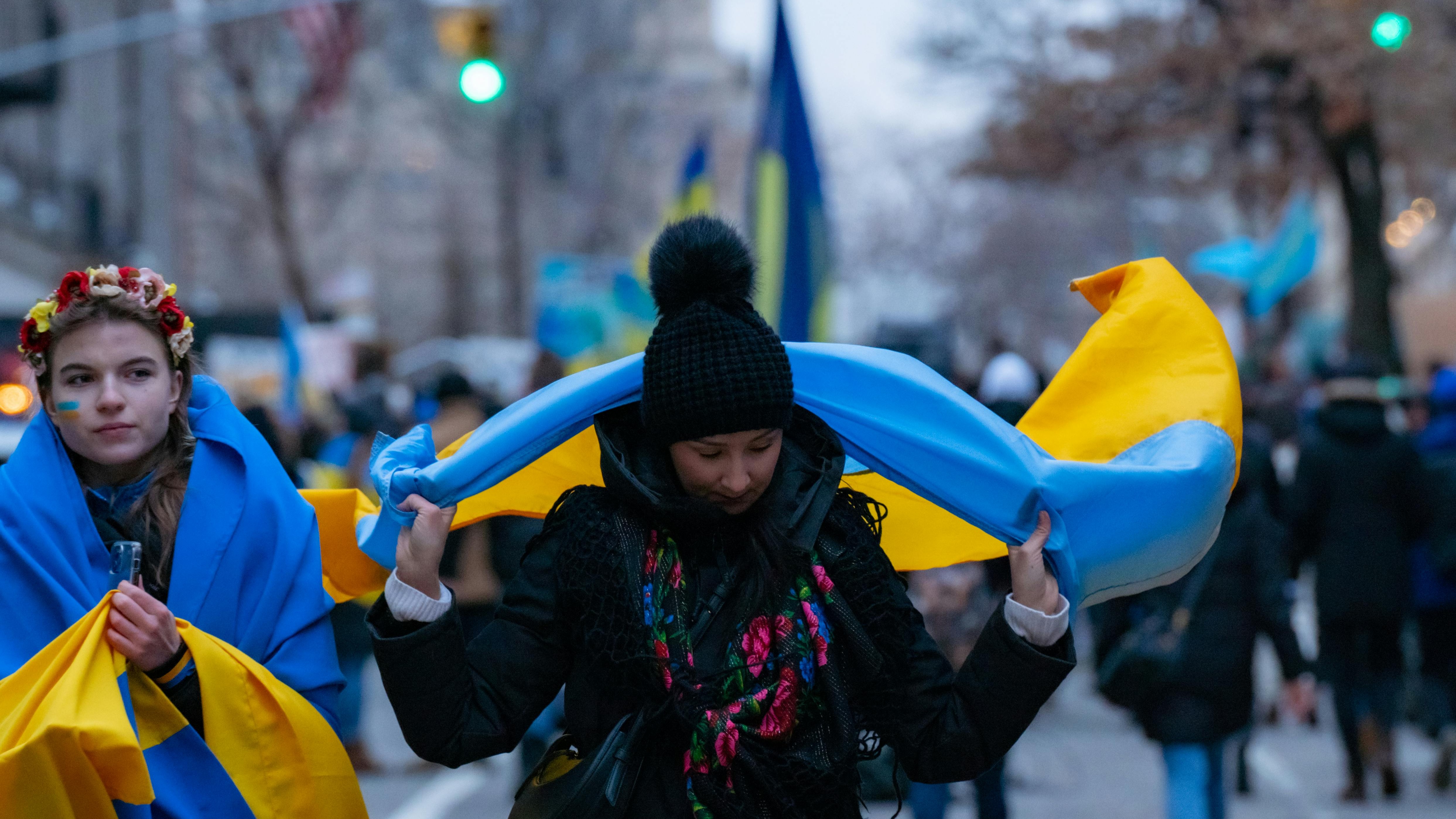
One might ask oneself: "What can I do right now to make my country a better place?" This does not necessarily have to be something beyond reach or measured on a global scale. Supporting and caring for one another, working within one's means for the good of the country — that is already no small thing. Refusing to be indifferent is also an expression of love, one that shows the country's fate is a personal matter, not something distant and abstract. Beyond this, patriotism can be expressed through fighting injustice, seeking solutions for meaningful change, and readiness for self-sacrifice in order to preserve freedom. And an extraordinary number of people are right now sacrificing themselves to defend our homeland. This invisible bond between those who guard the borders and those who stand in the rear ensures the country's resilience in the face of all challenges.
Generally speaking, is it an easy thing — to nurture love for one's homeland even in such a difficult time? "War is a time of tremendous loss, but it is also a chance and a time for great opportunities of spiritual growth." Over the years of independence, the concept of patriotism in our country has taken on a social dimension. A generation of free citizens has formed — citizens for whom the national interest is not an external demand, but a personal value. It is precisely this inner sense of freedom that transforms the readiness for self-sacrifice into a conscious choice to preserve the future of one's land. When we learn to be strong, to share what little we have, and to remain human to the very end, we defeat the enemy first within ourselves, becoming a nation that cannot be broken — for its strength comes from inner wholeness. I believe that during this period, every person has tried to define their role and responsibility in this struggle.
Patriotism as a Form of Self-Identification
The growing need for self-identification is also a form of patriotism. When people continue to cherish national traditions, care for the preservation of historical heritage, and spread awareness of the importance of cultural identity, they prove that the country will endure. An interesting trend can be observed: elements of culture adapt in response to the challenges of the present, become an inseparable part of it, and take on new forms. This can be compared to a living energy that seems to unite generations and shapes patriotism as part of the genetic memory of the nation. Moreover, the moment when the "inner code" becomes legible in a global context arrives when expressions of culture transcend national borders, transform into new forms through art, music, film, and the like — and thereby acquire value for the entire world. This kind of patriotism does not confine national identity within borders but, on the contrary, grants the right to participate on equal terms in the global dialogue, offering the world a unique experience of resilience and creation.
Our identity is now measured not only by language or territory, but by how we are represented in the global network. Music, sport, and film become those universal mediators that allow patriotism to cross borders and transform into a source of inspiration for all humanity. Take, for instance, director Tanu Muiño, who has become a true ambassador of creativity, directing music videos for world-renowned artists — from popular Western performers such as Harry Styles and Dua Lipa to the South Korean group BTS. Such success is part of an ethic of solidarity, as it opens doors for an entire generation of Ukrainian artists, designers, and cinematographers. Tanu frequently brings Ukrainian teams and brands into her productions, causing the global community to admire her professionalism. Mstyslav Chernov and Evgeniy Maloletka managed to capture the highest documentary truth about the war in their work 20 Days in Mariupol and won an Oscar — an act that moved the entire world to feel solidarity at the level of deep human empathy.
Our athletes remain symbols of resilience: Oleksandr Usyk, with his victories on the world stage, is perceived as a manifestation of national strength. Yaroslava Mahuchikh sets world records and demonstrates leadership in athletics as a symbol of the perseverance and indomitability of Ukrainian youth. A vivid example of the combination of sport and civic responsibility is skeleton athlete Vladyslav Heraskevych. He was among the first to use the global sporting arena — the Olympic Games — to directly manifest his opposition to the war, which generated enormous resonance in the world's media and once again reminds us of the price of peace.
Global Patriotism, or the "Arirang Effect"
The achievements of compatriots abroad are not only a cause for joy, but also effective cultural diplomacy. When Ukrainians become leaders in their fields, they make the country visible to the world not only through the lens of hardship, but also through intellectual and creative potential. For example, Maryna Viazovska is an outstanding mathematician and laureate of the Fields Medal. Her success in solving complex mathematical problems is an example of the nation's highest intellectual caliber, recognized by the global scientific community. Mykhailo Fedorov and the team behind Diia are an example of how Ukraine has become an exporter of digital solutions. When other countries study our experience in digitalization, it builds the country's reputation as a "technological leader." This kind of pride in one's nation inspires people to also strive for success, so as to make the state visible and respected in the world.
Today we observe how the forms of expressing patriotism are changing, combining the national with the international. Local distinctiveness can harmoniously fit into the modern global system and unite people across the world. This means that the phenomenon of patriotism in a globalized world has yet another important dimension: the capacity of a nation to generate values that inspire genuine respect and admiration even among citizens of other states. It also demonstrates that national identity can become a source of inspiration for the entire international community — pride in a country can be felt not only by its own citizens, but also by people from different corners of the planet, captivated by its contribution to global security or culture. Thus, in a globalized world, patriotism takes on a new, digital form.
In the modern world, the boundaries of patriotism are blurring, giving rise to a phenomenon that might be called the "Arirang Effect." This new concept was born from the triumphant comeback in 2026 of the world's most famous South Korean group, BTS. The album contains many lyrics tied to their Korean identity and culture, and the most powerful musical "blow" was the fusion of rap and the folk song "Arirang" (아리랑). Millions of fans around the world, upon hearing Arirang, felt not merely sympathy — but genuine pride for Korea, for its love of its roots. People embraced not just the song or the beat, but a nation's ability to preserve its identity while remaining modern.
Unfortunately, despite the positive fruits of patriotism, history has left humanity with painful lessons about where the ideology of national exceptionalism leads. The events of the past century demonstrated that patriotism concentrated on the idea of one nation's superiority over others inevitably leads to catastrophe and dehumanization. This form of self-affirmation through oppression destroys both the outside world and the inner integrity of the state itself. In contrast, mature, modern patriotism and national success are measured not by the number of territories conquered or ideologies imposed, but by the volume of values a nation is capable of offering to humanity.
The foregoing leads to the conclusion that patriotism in the modern world is not isolation within borders, but an active presence in the world — one in which the authenticity of each country becomes an advantage. The feeling of patriotism teaches us to seek what unites rather than what divides. Accordingly, the goal of patriotism is not to make one's country better THAN others, but to make it better FOR others. If we renounce hostility not only within the nation but also toward other peoples, it can inspire people to become better — reminding them of the price of peace, freedom, and dignity. Patriotism thus ceases to be merely a local feeling. It becomes a "soft power" that moves the world to root for the success of a particular state, recognizing its moral leadership and intellectual potential. The capacity of people for unity, multicultural dialogue, and simultaneous devotion to their country determines the long-term viability of the state. It also means a special sense of responsibility: to preserve and honor historical memory, to work diligently today, and to strive together for a better future.